Sunday, December 7, 2014

Blog Post #16 FINAL REFLECTION

FINAL REFLECTION VIDEO

     Thank you to Dr. Strange, and the entire EDM310 staff. I know that this course can be intense and I think that I made it out strongly, and I will absolutely be taking what I learned from this course to my classroom. I am happy to say that I survived EDM310 and will continue to learn and grow from here.


Monday, December 1, 2014

Blog Post #5 Part B

PLN's and Using Them Effectively

pln

     When we first started learning about Personal Learning Networks or PLN's, I had no idea what they were. I was confused by the fact that students across the world knew what they were and had better ones than anything I had ever seen. I am still developing my PLN through this course but I have definitely seen an improvement. Originally my PLN consisted of the few teachers I kept in contact with from my old schools. However, now I am contacting teachers from around the world. I have commented and contacted teachers and students with very different learning experiences than my own, and that has helped me grow in my profession. I believe that if I had not started doing the c4c, c4k, or c4t's my PLN would be drastically different, and for that, I am thankful for a learning experience. I am still using twitter and blogging to follow different EDU accounts and chats to keep my PLN growing.

C4T's for Nov

 C4T's for November

scabble blocks


C4T 11/27
Mathew Needlemen
Creating lifelong learners:
Moving Beyond the Personal Narrative

In this post Mr. Needlemen used a post written by a different educator. This post however, gave me great ideas to bring to my future classroom. Oushing beyond the personal narrative at a young age and allowing students to open their imaginations up and explore. He gives examples of showing paintings or photos of historical pieces, and by using open ended questions, we can explore these photos and let the writings begin. I think that Mr. Needlemen has very good posts and that they bring up some great ideas. In this post, I thanked him for his writings and told him I would definitely be bringing this back into my class and told him how he could reach me at my blog.


C4t /11/16
Mathew Needlemen
Creating lifelong learners:
Clarifying Questions in the Common Core Classroom

In this post Mr. Needlemen is bringing up the idea of open ended questions. He says that by using open ended questions, we can have more detailed answers and the students can elaborate even more. I explained who I was and that we were commenting on teacher's blogs. I also said how I agree with his points about the open ended questions instead of just regurgitating information. I left my name and blog in case he wanted to look into it.

Sunday, November 23, 2014

Blog Post #14

Joel Klein

never stop learning

Problems listed
  • the problem with choosing our teachers
  • seniority

Solutions listed:
  • recruiting teachers from the top of class
  • eliminating the least effective teachers rather than the new hires


   In this article Joel Klein is discussing some of the issues with our education system, but this time it is more focused on the teachers rather than the students. He lists problems that the schools are seeing and uses a reference to Albert Shanker to conclude his argument with solutions. Some of the solutions don't seem that bad of an idea.

PROBLEM LISTED: Hiring teachers and choosing more effective ones. So with this argument I somewhat agree and somewhat disagree with it. I understand where he is coming from because his argument is stating that teachers are being chosen solely because they have a degree, and not for their actual teaching abilities or knowledge. I think that we should be looking more into depth at the college career of teachers and look at their standards and teaching certification classes. If the grades are poor but they passed, I think we could go more into testing like Klein suggests and make sure that they are highly qualified. I definitely think that that would help with this issue. I know it would make me feel better knowing that everyone becoming a teacher was going to be held at the highest of standards.

PROBLEM LISTED: Seniority. I 100% agree with this one. I think the issue of seniority in schools is outrageous and has gotten entirely out of hand. Even in my own high school, I had seen some of the best teachers that had only recently been added, get cut because they had been hired within the last two years, while teachers that had tenure and weren't effectively teaching anymore, got to sit and continue to do their jobs in a less than enthusiastic way. I'm not saying every school has this problem, but many do. Teachers that are no longer effective in their positions should not be granted leniency due to seniority. I think that again, re-testing teachers to make sure that all teachers are very familiar with the information that is being taught, is a great idea. If they can practice all of the necessary skills, then they should be kept, in my opinion.

Of the other problems listed, "giving far more school choices to families, using technology to improve teaching and learning, adopting a knowledge-based curriculum and starting education before a child is 5 years old" , I do not waiver from those beliefs at all. I would have to agree. More so than any, the technology portion, and adding more choices in schools. I think these are problems that we are slowly beginning to see being rectified. Maybe in a few more years we can see all of these changes come to life.

Tuesday, November 18, 2014

C4K's for November

 Final Comments for Kids (C4k's)
October/November


Raised hands holding technology

 10/31- William:
William's blog
    William wrote about Halloween for his blog. He discussed his favorite monster, and explained why people used to dress up for the holiday. He definitely did his research because he knew that they used to wear masks to scare away "the dead" from coming back. William asked if anyone knew why we get candy on Halloween now. I told him where I was from and how I got to his blog. I also corrected some of his capitalization errors. After that I told him why we get candy, and wished him a HAPPY HALLOWEEN!!


11/6- Anna:
Anna's Blog
    Anna is 13 and in an art class where they blog about the different things that they do. Some of the different projects Anna worked on were a product design project, and a collage project. The project I left my comment on was for her collage. She talked about how long it took and exactly how she came to it. Her art even got displayed at the local hospital, and that gave her some great feedback. You can really tell Anna enjoys her art and definitely knows her way around a blog. She has photos and slideshows on each of her posts. I told her who I was and commented how great her photo looked and that I too, enjoy crafting and doing pinterest projects. I really enjoyed her blog.


11/18- Alexis:
Alexis's blog

   Alexis is in the 7th grade in Minnesota. On her blog she wrote about how fast the second quarter of her school was going by. She talked about how she hopes to not be slothful because she wants to do well, and also wants to keep herself active in class. I commented on her blog where I was from and wished her a happy quarter ending and hoped that the second quarter went by just as fast. I also told her to keep up her good work and keep pushing forward.

Sunday, November 16, 2014

Blog Post #13

What Did I Leave Out?

Available on the Appstore

    If I was in charge of EDM310, I don't know how many changes I would make. But this post was interesting to me. This week we were asked to create an assignment that we would add to the EDM310 class list of blog posts if we could. Interestingly enough, I thought our workload was intense in the beginning, but now I see its not all that bad. I came up with this idea after one of my C4T teachers used it on her blog and showed how important it is and how useful it can be. 
   
 If I could add to the EDM class, I would assign them a blog post that calls for them to find an app in the app store (because everyone in the class has access to an apple product one way or another) and use it in a lesson. I would want them to do research and find a new app or any app that teachers are using today in the class and show how to use it. Explain why you chose that app and what the benefits of it are. There are so many great apps that teachers use daily and many of them are free. This blog post would give them a lot of freedom to do their own selecting but still has them blogging about technology in the class. I would try to have each student share a 2-3 minute imovie video about the app and how they think it will benefit them.

    There are not many things that this class doesn't cover but I think that something along these lines would be fun and an easy opening blog post assignment for the students to come.

What I'd Use
     If I were the one writing an answer to this blog, I would use the app Paper by FiftyThree. Paper is a great app and is free to use. The only thing you pay for are the extra brushes and tools you wish to use. Paper is a collaborative workspace where anyone from anywhere can draw or sketch notes and put it out for the world to see. It gives the student (and teachers!) the opportunity to break the barrier of "sharing is bragging" or "sharing is cheating" and rather brings the idea "sharing is collaborating". Silvia Tolisano, author of the Langwitches blog, started using sketchnoting and crowdsourcing on her blog to ask why students and teachers were afraid to share. After seeing her sketchnotes and watching Sunni Brown's TEDtalk on doodling, I HAD to find this app, PAPER. It truly is fun. Its like painting and creating without the mess. Once you send it out to the internet it is free to be "remixed" by anyone. Not to go about changing it in a bad way but to see different answers or see different choices of words, colors, etc. Different minds come up with different things. This app would be a great way for teachers to have students create art for an iMovie project, allow for different answers to be shared, come up with notes to add to slides.. the possibilities are endless. Unfortunately, my ipad is dead and the cord to charge it MIA, otherwise I would have an iMovie on here about it. LOOK UP PAPER, by FIFTYTHREE. It is really fun, and can be used anytime. You may even find some of my remixes on there! (;

Wednesday, November 12, 2014

Project #12 Part B

Delivering a Smartboard Lesson


     In this lesson, Callie and I decided to do a lesson plan we found on the Alabama Learning Exchange. The one we based our lesson plan off of one called Sense Suspense, but after editing it a little more we found a new lesson to deal with similar tasks, listed on the SmartBoard Exchange. We decided we were going to deliver a smartboard lesson plan to a kindergarten class about using the five senses and how we use each one daily. Callie did most of the video speaking, and I worked mostly on the technical side, editing the slides. We worked collaboratively on this project and think we came out with a really great, easy lesson plan on the five senses. 


Sunday, November 9, 2014

Project #10 Interview Movie


Interview Movie


    My interview was with Ms. Casey Silvers. She is currently a high school teacher in Clarksville, Tennessee.  I chose to interview her for a few different reasons. One being, she is not in Alabama, which I thought would be interesting because it can show how different our school systems are and how much we have changed. We are also related....She's my cousin. Casey recently graduated from Austin Peay University in Tennessee and was hired on less than a year later to her current position. When I asked her how she was enjoying her first year of teaching I asked, "Do you love it??" to which she replied, "Love is such a strong word... Each day comes with new and unique struggles and rewards. It's been a journey!" Casey is currently a History and ACT prep teacher at her school.


Blog Post #12

Assistive Technologies in the Class


     This week's blog post was a little different. Blog post #12 was a collaborative group post. Fortunately for us, our group consists of two people: Myself, and Callie Barton. In this post we decided to create a slideshow showing off the new technologies we learned about this week and how we can use them in the classroom to assist with hearing and visually impaired students. By using different research engines we were both able to come up with similar ideas and tools after watching the videos assigned. I worked on the general tools that most students would encounter on a day to day basis in a technologically advanced class, along with finding different statistics about visually and hearing impaired students. Callie worked to go into depth about the many ways we can use our apple products for these students. I can honestly say I never knew my ipad could be used in such a way. We both found videos that we found very useful for this project and decided to add them in. By using Google Slides and Skype we were able to collaborate on this project and get it done in no time. The outcome was this great slideshow... enjoy!

Thursday, November 6, 2014

C4T Summary (#3)


Summaries of C4T #3
Silvia Tolisano

    On 10/26- 
My teacher for the past couple of weeks has been Ms. Silvia Tolisano. To say that I learned a lot from her blog in just two short weeks, would be an understatement. Ms. Tolisano is an avid blogger and uses technology every way possible in the class. Ms. Tolisano is now in Brazil and focuses on "globally connected learning" and coaching teachers and anyone who wants to know, how to use technology effectively. Collaboration and sketchnoting were two of the biggest things in her recent posts. 

On her first post I commented on, "Crowdsourcing Answers To: What is Your Reason for Not Sharing as an Educator?", I learned what Paper, Mix, and sketchnoting meant. Paper is an app available in the app store (AND ITS AMAZING!) that allows you to free flow ideas and drawings in a web based journal that anyone can edit or change. It is known as mixing or re-mixing. These two tools allow the user to slowly ease into peer editing. Just because someone edits something doesn't mean it is bad or that your original was not worthy, they just wanted to mix it up a bit. Its about sharing and getting your ideas out there to the world and collaborating. There are so many different ways to use Paper in the classroom that I will definitely be using it in my class. For instance, Silvia put out a simple question to the Paper world... "What is your reason for not sharing as an educator?" and the results were drastically different, and yet interesting because you see a side of reflection coming from them.
"As an Educator, what is your reason for not sharing?"Answers to "What is your reason for not sharing"

   You can see that this student chose to fill in some of the bubbles and say "handwriting, fear, spelling errors", etc. That is just one of the many responses received. The problem is SHARING is not a bad thing any more. Many of us are too afraid to share because we have always been taught not to share as it is seen as cheating or bragging and that's not the case any more!


Tonight (11/6)-
 The blog post I read today was more about sketchnoting. In the previous photos you can see how Ms. Tolisano used the app Paper to sketchnote and crowdource a question. But this post is more about the actual usefulness of sketchnoting in the classroom. The article is Sketchnoting FOR Learning. This post is really more of an introduction to her sketchnoting 101 seminar that is coming up but she does give a great slide show on all the ways that sketchnoting can be used in the classroom.  For those of you that don't know, to "sketchnote" means to doodle your notes or to add little pictures drawn to help remember things and use them again. It is a tool used to train your brain to remember more easily. I know for a fact this works because I have been doing that in my science classes since I was younger, except back then it was frowned upon because it was "doodling". This is the actual slide show below, and it really does have some great work in it. The biggest idea that I understood from the doodling was that sketching brings animation to an otherwise boring lesson. You can liven up your lessons and you can have students enjoy interacting with them. It brings the material to life. You can view Ms. Tolisano's slideshow HERE. And I HIGHLY recommend watching the five minute video on doodling and its perks by Sunni Brown, HERE.

In both comments I explained what I learned, I thanked her for the information and gave her ways to contact me.
Ms. Tolisano, My name is Jennifer Flowers. I am currently a student in EDM310 at the University of South Alabama. Part of our classwork is to comment on other teacher’s blogs to educate ourselves better on not only blogging with others, but how collaboration and blogging has changed the education program. I LOVE this blog post. I have never heard of Paper, or Mix. I’m Very interested in learning about both of these! I have never heard of sketchnoting, but we can just add that to the list of things I will have to familiarize myself with. Your blog has shown me so many different things in just one post, that I know for sure I am going to spend a lot of time looking over the others. I know for me sharing and collaboration is becoming more of a slow process for me to dabble in. When I was in school we were all taught “sharing work means cheating….” or “…you can work in groups, but everyone has to write their own papers otherwise I don’t know what you did..” Sharing has become a new part of education that needs to be elaborated on more so that we don’t have students so scared to share! (Teachers too!) Sharing work

Read more at: http://langwitches.org/blog/2014/10/14/crowdsourcing-answers-to-what-is-your-reason-for-not-sharing-as-an-educator/comment-page-1/#comment-309760 | Langwitches Blog
Hi Ms. Tolisano, My name is Jennifer Flowers. I am currently a student in EDM310 at the University of South Alabama. Part of our classwork is to comment on other teacher’s blogs to educate ourselves better on not only blogging with others, but how collaboration and blogging has changed the education program. I LOVE this blog post. I have never heard of Paper, or Mix. I’m Very interested in learning about both of these! I have never heard of sketchnoting, but we can just add that to the list of things I will have to familiarize myself with. Your blog has shown me so many different things in just one post, that I know for sure I am going to spend a lot of time looking over the others. I know for me sharing and collaboration is becoming more of a slow process for me to dabble in. When I was in school we were all taught “sharing work means cheating….” or “…you can work in groups, but everyone has to write their own papers otherwise I don’t know what you did..” Sharing has become a new part of education that needs to be elaborated on more so that we don’t have students so scared to share! (Teachers too!) Sharing work can only go up from here because we can use past shared experiences for better future experiences!! Absolutely thrilled to have you as my assigned teacher this week. Thank you, Jennifer Flowers

Read more at: http://langwitches.org/blog/2014/10/14/crowdsourcing-answers-to-what-is-your-reason-for-not-sharing-as-an-educator/comment-page-1/#comment-309760 | Langwitches Blog

Sunday, November 2, 2014

Blog Post #11

What Can We Learn From These Teachers?


     More often than not, we can learn something even if it has been taught to us before. Each day we learn something different about Project Based Learning and its abilities to go above and beyond the original learning cycle. By offering a blended learning cycle we can see children have more fun with their education and become excited to be learning. After watching Roosevelt Elementary's PBL Program I think that I really understand the underlying message from each video. ENGAGE. ENGAGE. ENGAGE!!!! Engaging the students is one of the most important things you have to be able to do. Any teacher can stand at the front of the room and lecture on the fact that it is raining and that helps the grass grow, but a PBL teacher allows the students to come up with reasoning behind that statement and APPLY it. Students could work on building a rain gauge and adding that data into a chart on their blogs, amongst many other ideas. PBL is all about engaging the student and making them want to be active learners and having them grow as individuals. 
      I think my favorite video was the Building Comics one. I LOVE the idea behind that project and the fact that is teaching them to be super cyber-citizens. It allows them to have fun and express their creative side while also teaching them how to be safe on the web and not allow anything to happen to them via malicious links/sites or just hackers as one child stated.
      With the Andersen video I found it very interesting that the "learning cycle" was actually different from the "blended cycle". For some time, I've thought that they were generally the same thing. The 5 E's of the learning cycle are very easily overlapped into the blended learning. ENGAGE, Explore, Explain, Expand and Evaluate. By using these to be applied in PBL we can come up with projects or entry questions that engage the students and capture their attention. With the blended class we see the students using classroom techniques, mobile, and online. Students easily weave in and out of these three realms because they have all of these at their fingertips. I agree with Andersen that we should push forward with the blended and true learning cycle together because they make for a more exciting and interesting classroom experience for the students. 
     I think we can learn from all of these videos that students need to be able to reach all levels of their potential, and by keeping them in a traditional classroom we are hindering that from taking place. Students should be able to have fun while learning and develop their skills more each day. Without the exciting work that PBL brings to the class, students would be bored using just a pencil and paper all day. These teachers bring a new light to PBL and allow for the students to gain from the experience in so many different ways, be it: 21st century tech skills, highly developed classroom work ethic, public speaking skills or even collaboration, none of these would be possible in a traditional classroom alone.

Tuesday, October 28, 2014

Project #14 PBL Lesson Plan 2

PROJECT BASED LESSON PLAN 2
"ALL ABOUT WEATHER"

Weather sign


      In this PBL leeson plan, Callie and I decided to teach the students about different weather patterns. Each of the students will be put into a group (one of four). The weather patterns they will be learning about are Drought, Flooding, Hurricanes and Tornadoes. We found a lesson plan we really liked off of the ALEX website and then used the Buck Institute layout for our lesson planning. Each student is required to blog about their experiences along with many other technology based requirements also.

The actual lesson plan is here: PBL Lesson Plan

and the rubric is listed here: Project 14 Rubric

Monday, October 27, 2014

Blog Post #10

What Can We Learn from Ms. Cassidy

Twitter in k-8 classroom chart
     In Ms. Cassidy's videos, she references using Twitter quite a bit. For a lot of people, Twitter is still new to them and the concept of using it in the classroom is absurd. But, for those of us who understand that building a PLN is a never ending process that can continually be used, Twitter can become a staple.
      In Ms. Cassidy's classroom, she uses many different tools for technology such as: blogging, tweeting, using wikis, using flip cameras, and many more. Some of the ways she uses these are very similar to what we are currently doing in our EDM310 course. We are all trying to overcome the same thing: overcoming the technology gap that is present in many classrooms. Many teachers are still stuck in the same old ways of teaching. As Ms. Cassidy shows, there are so many very cool things you can do in the classroom and enhance the learning experience with these tools. 

    I believe that I will most use twitter and blogging in my classrooms. Twitter and blogging can go so well together that is hard to not use one without the other. Tweeting is essentially sending out a statement or a question or thought. You can send this to thousands of people at a time or directly to one specific person. By using twitter we can come up with the answers needed or even find new questions to ask. Blogging on the other hand, is a way to share anything and everything. Twitter is sharing at a smaller level with great results but blogging can be seen by people not using twitter, also. 
    I plan to use blogging and skype effectively in my classroom. I intend to have a class blog set up so that my students, their parents, and people from around the world can see what we are doing in our classroom. We will post daily work and fun projects that we are working on. We can also use skype to contact different experts on their work, and apply their conversations to our projects. Ms. Cassidy uses Skype to communicate with another classroom at a different school and has "blogging buddies"! How cool is that? I definitely plan to take that to my class as well. 
     I really think that I will stay similar to what Ms. Cassidy does in how to protect the students. By only using their first names, and not adding a photo directly of them it can keep their identity hidden from people with ill-intentions. I also plan to use some of the more restricted access blogging sites that have monitoring functions. I want to know my students are safe but still enjoying sharing their works. 
   All in all,  I think we can all really benefit from using technology in the classroom when used appropriately. Ms. Cassidy definitely has it down pat. What I thought was most interesting is that she is still learning how to use twitter and facebook. The best teachers have to be learners as well.  I think the best quote that really captures the essence of these videos lately is this: "In learning you will teach, and in teaching you will learn."- Phil Collins.

Sunday, October 26, 2014

C4K's for October

 Comments on Kid's blogs for October

10/1- Deneen's blog
    Deneen's blog was a little difficult to understand at first. He was arguing for telling the truth. That's what I got from it. There was a lot of grammar mistakes making it difficult to read. I told Deneen how to fix these mistakes and that I agreed with his statements. There was not much for me to comment on because it was only a few sentences, but I felt like he understood I wasn't correcting him out of rudeness but to help. I explained how he could contact me and how I came to find his blog.


10/6- Andrew's Blog
    Andrew wrote about students losing recess break for misbehaving. Some of his classmates disagreed but I agreed with Andrew. He said that if students are misbehaving then they should lose recess play time, because recess is a reward and if students cannot act accordingly in class then they don't deserve to get to run and play. Andrew had a few spelling errors but other than that his blog was good. I told him I didn't see very many errors and left him notes on how he could easily fix them. Andrew has a good mind set. I left him my blog info to contact me and let him know who I was and what the idea is behind us blogging and commenting on student blogs.

10/19 -Ikechi's Blog
    Ikechi had such a great short story called "The Magical Bite". He wrote a story about disobeying parents. It was a short story where a young boy ate a rotten apple and he became, quite literally, a "rotten apple"! He became "bad" is how Ikechi described him. His language was so descriptive it was hard to believe he was only in 5th grade. I told him how much I enjoyed reading his story and it definitely made me never want to disobey my parents again! I left my blog information and followed back up on his comment.

10/26-  Elizabeth's Blog
   Elizabeth is in grade 6 at Pt. England school in Aukland New Zealand. This week she wrote a blog on how to protect your skin from sun damage. She had very good points and said that everyone should be wearing hat, sunglasses, and sunscreen.  She even had the hours listed that were the most dangerous to people's skin because of the sun's height in the sky at that point. These kids are very smart and know how to write a quality blog post. The only thing I noted that she was missing was a space between a couple words. I told her how to catch me at my blog and that I really enjoyed hers and I agreed with all her statements!

Project #12

Part A Smartboard Tutorial


Sunday, October 19, 2014

Blog Post #9

What Can Teachers and Students Teach Us About Project Based Learning?


     It seems as though we have answered this question quite a bit throughout the course, and yet there's a new answer each time. I think that this is funny because answering this question over and over has shown me that there is so much to learn about PBL because it has so much to offer. 

    For instance, in Seven Essentials for Project Based Learning I learned that even knowing the general Idea for Project Based Learning, using the seven fundamentals for it make it seem much easier to apply. Having your students motivated is always the first step. Getting them excited by starting off with an introductory event, which can be a movie, speaker, photo, chat, (anything!) it drives the students to "Need to know". It gives them the sense that they need and want to know what they are going to do.By giving them a purposeful project they feel inspired.

      When I watched Project Based Learning for Teachers I saw how many different ways PBL can be used with technology. We have only begun stepping into the world of technology in the classroom and in a seven minute video he lists at least 10 I've never even heard of...BUT MY STUDENTS WILL. I plan to use this innovative teaching in my classroom because it has been proven useful. It shows you that the students want to learn. They want to succeed. We just have to learn to help them and not do all of it for them.

     I chose to watch What Motivates Students Today? because motivation seems like its the most important role of PBL. If a student doesn't want to learn anything or everything seems boring, then they won't be succeeding. We want to flip our classrooms and not keep them boring and dull. In this video I realized that some of the smaller things can motivate students. For example, one of the older students said that he really enjoyed when the teacher shows his work or compliments his work because it shows that hes doing something. He felt proud because the class and teacher were noting his accomplishments. That's HUGE. Just to know that by SHOWING a student's work, it makes them want to succeed even more, is one of the great things about PBL. one of the final steps is to present it. 

   Learning about how students used PBL in PE was really interesting to me because I never thought that PBL could be used in PE! This project is such a good idea to have the students get involved. By allowing the students to each come up with a different PE unit, not only do they get to decide some of the best ones, but they are collaborating ad self reflecting on how to better not only their projects, but their classmates' as well!

     I also felt similar about the video about Sammimsh High school who flipped their classrooms on  5 year PBL plan. FIVE YEARS to completely flip a school. How intense is that. After watching High School Teachers Meet the Challenges of PBL I realized two things. 1) IT IS NOT ALWAYS GOING TO HAPPEN OVERNIGHT. This may seem silly to say "oh wow, you just realized that...?" No. What I mean is that flipping a classroom is hard work and takes a lot of determination and collaboration from a lot of people! Now imagine doing that with every classroom in a school. This a very rigorous five years and they seem to be seeing a great increase in graduations, better grades, and overall participation levels. 2) Sometimes you will hit a brick wall. (Thanks Randy Pausch for the reminder!) The teachers in this video have to meet every day for a year to come up with ways to add PBL into English and Math, and I never would have thought that those two courses would need it. But it makes sense now, seeing them use it in action. One of the teachers in the video says that "some days you feel really accomplished, and then there are days when you have to go home feeling like its not gonna happen.." But they come back every day and continually collaborate and come up with good ideas to put in their classroom lesson plans. I really think this video was one of my favorites because you can see it happening real time. You can understand the frustration of having to work at it for weeks before coming up with a good starting point, but then you can see the fantastic results.

    We can learn a lot from teachers and students from PBL but I think the main thing we keep seeing is KEEP BEING A LEARNER. No matter what you are doing, become a life-long learner and nothing can stand in the way of inspiring people to do and become what they love by using real tools used everyday in the workplace and classroom.

Sunday, October 12, 2014

Implications and Teaching Opportunities for Camera Use in Teaching and Learning

"I DON'T USE MY PHONE EVERY DAY." - People in DENIAL


camera and phone rubberbanded together
 Dr. Strange gave us these astonishing facts:
"A recent study by Zogby Analytics reports several interesting findings regarding young people aged 18 - 24:

1. 87% say their smartphone never leaves their side.
2. 80% say the very first thing they do in the morning is reach for their smartphone.
3. 78% say they spend 2 or more hours per day using their smartphone.
4. 68% say they would prefer to use their smartphone instead of their laptop or personal computer for personal use.
5. 91% say that having a camera on their smartphone is important (61% very important)
6. 87% say they use their smartphone camera at least weekly. 59% use their smartphone camera at least every other day. 44% use their smartphone camera for still or motion picture taking every day."

With so many recent updates to the world of technology it is almost impossible to NOT own a smartphone. I got my first phone when I turned 13 and I was LUCKY to have a camera on it, AND IT HAD A FLASH! It was intense, feeling like I had won a million bucks. The truth of today though is that kids that are under the age of ten have smartphones, use them daily, and guess what.... theirs has a high speed camera in it already.....And it has a flash. Uncle Ben said it best: "..with great power comes great responsibility." (Spider-man... for all you non-nerds...) Children today hold a great power and with that must learn their responsibilities. Some of the issues with having smartphones in the classroom is that students do not have a very long attention span. Everyone wants to be updated on whats happening, even if its happening in the same room that you're in. Fighting the urge to not text your friend in class is like trying to fight off the urge to not blink.... its really hard to do but eventually you cave. I know that being a student in college, this is definitely hard so I cant imagine how it would be for students in an elementary school.
cell phone clipart

Knowing that my students will have always known cell phones with cameras can be entertaining. We could bring in old phones and ask them to figure them out and take a photo, only to show them what its like not having one. This presents an issue though, with every new technology, there are teachers that still have no idea about them. Many teachers want to keep technology out of the classroom and that, in my opinion, is a terrible idea. These students know so much about technology and smartphones that they are teaching the teachers how to use it. Teachers that embrace the technology revolution can do so much more in the classroom.

Examples:
  • Using their cellphones on a "fieldtrip" around the school taking photos of certain plants, scavenger hunt style, to bring them back and upload them to a poplet for a science lesson.
  • having them do a venn diagram about the differences and similarities of phones from the past and phones they have now
  • creating an idea for a future phone by basing it off of the phones they have. What would they keep/change/add
  • record the teacher's lecture/project instructions so they have them to take home and don't forget
  • Using their tablets to search AVL and other virtual libraries for links and upload them to their blog
  • Text-a-friend assignments: when your partner is absent from school you can text/skype them so they are not behind
  • playing music that they don't know and having them use the listening features on the phone to identify it
  • taking photos to add to iMovies
  • creating poplets/iMovies
  • having them look up individual answers to questions they don't know and see who can find the most answers
  • taking photos of a page from a reference book that cannot leave the library, so they can have it with them later
  • playing TELEPHONE while using an actual telephone, for famous quotes
There are so many different things that we can come up with. These are just a few ideas on how we could use each individual child's tablet/phone in the classroom. These could all be used in conjunction with other projects as well.  I really believe that technology is going to be in the classrooms a lot more from now on because of all the cool things we can learn to do with it! Hopefully one day we can create more signs like these: Cell Phones in use signs

Wednesday, October 8, 2014

Project #9

Teaching Digital Natives Video Commentary
Group #5 
Topic #1


Group: Jennifer Flowers, Callie Barton and Patrick Morrison

Tuesday, October 7, 2014

Blog Post #8

What Can We Learn About TEACHING and LEARNING From Randy Pausch? 

Randy Pausch

     "I mean I don't know how to not have fun. I'm dying and I'm having fun. And I'm going to keep having fun every day I have left. Because there's no other way to play it," he said in his Carnegie Mellon lecture. "You just have to decide if you're a Tigger or an Eeyore. I think I'm clear where I stand on the great Tigger/Eeyore debate. Never lose the childlike wonder. It's just too important. It's what drives us." -Randy Pausch, Last Lecture

     Let me start off by saying, WOW. What an emotionally-filled, fun, entertaining way to grab someones attention with a video like that. I've never felt more, like I am on the right path, than I do after this video. There are so many things to be said about learning and teaching from Randy's video and I don't believe we will all come up with the same thing, because there are so many different aspects to it. I'm going to attempt to cover a small fraction of what I have learned from this experience. Randy's Last Lecture.

LEARNING-
   Similar to what we covered, he mentions a few times about staying a learner. In the Pausch video Randy explains that throughout your time, stay curious, and learn always. One of the examples he gave of that was when he explained his first year of teaching Building Virtual Worlds. He was lost on what to do with students that had exceeded his expectations so he called his mentor for advice, and was told: "Tell them they can do better," and they did. For ten more years. Because he was constantly developing a way for his students to continually become better learners (and teachers) he himself was evolving and becoming a better learner. 
Another thing that I learned from watching this video is that PBL is not a new concept. Randy Pausch and his team were using PBL in their class in the 90's. Project Based learning WORKS and it is so effective that you can eventually make it the only way to get things done. 
RANDY NEVER STOPPED TAKING ADVICE FROM HIS COLLEAGUES AND PEERS. Did anyone else notice this? Any time he was presented with advice on how to change something or become better, he took it in stride. He worked collaboratively with people every day to become one of the best professors and he did so with the help of others. Learning is asking questions, finding the answers, and sharing those answers. One of the final thoughts he had was about sharing. People need to be able to share their work and show it off. In order to get to the best final product though, it takes a team of learners, not just one person.

TEACHING-
  Throughout his lecture Randy goes back to his theory of "enabling others' childhood dreams." As an educator he does not focus on just his own, but others around him. I think this is one of the most important lessons he can show about teaching. Teaching has its hardships and not everything will go as planned the first time around. You won't always get into the school of your dreams, but with determination, help from others and taking good advice, you will probably be there. As a teacher Randy never gave up and he kept things FUN. He wanted to make sure his courses were entertaining. I think that if a course is not challenging AND entertaining then you lose a lot of the student's attention. "Never stop pursuing your childhood dreams." I think this speaks volumes about everyone's determination. One last thing on teaching would be that sometimes you have to give the students a "head fake". Sometimes we are teaching our students to develop a particular skill by making them think it is something entirely different. I just think this is such a great idea.

     Most importantly though, I think the lesson I learned from this video is that sometimes two people can be saying the exact same thing, and yet be saying to very different things by HOW they respond.
If a student brings you a question and you do not know how to do it, its easy to push it away and say "I DON'T KNOW!" and brush it away. But a true learner will respond in such a way that they too want to learn about it.... "I DON'T KNOW, BUT NOW I'M INTERESTED BECAUSE YOU'RE INTERESTED...." This is definitely something I will keep in mind, and I hope everyone else does too.  

Monday, October 6, 2014

C4T #2

Summary of Comments for Teachers #2

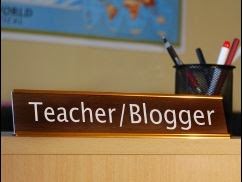
Teacher/blogger nameplate


My Teacher for the past couple of weeks has been Ms. Beth Knittle. Ms. Knittle is in Massachusetts and was a middle school science teacher and has recently left to become a K-12 "Technology Integration Specialist." This means that she is helping the teachers and students understand how to use technology in the classroom more and more. I am very interested in finding out more about her position because it sounds like a great job!
On her first post, Value Added Models: Where Are We Headed? she discusses how many states are adopting the value added models and bringing forth DDM's or District Determined Measures, to see how well each teacher does in the classroom. It gives the state a determinable amount of teachers that are doing exceptionally well and can show the top % of said teachers. 
In WEEK 6: I commented on her blog post: who I was, what my assignment required and how to contact me back. I explained that I didn't know much about Value Added Models or DDM's and that her blog was the first time I had heard of them. I explained that I was interested in looking into it more and that it was a very different subject. I am still a tad confused by them, but hopefully I will be able to find more information about them.


WEEK 8:
This week was a little different. Ms. Knittle's post this week actually coincides with something we recently went over in class. Her post was called The Power in Connections. She discussed how connections allow us to regain a lot of inspiration when we need it most. Being a teacher can sometimes be a bit of hardship but by keeping her PLN together, and checking in with other educators, this allows her to feel better and get more information, and ideas to revamp her lessons. The comment I left this week explained how we recently went over PLN's and how that was interesting because I am looking for ways to build my own. I told her I understand the sense of unity in using her PLN to her advantage and keeping in touch with people around the globe. She also gives a link at the end to Connected Educators. OCTOBER IS CONNECTED EDUCATORS MONTH. This truly is a great site and I am so happy to have been given Ms. Knittle's blog or I wouldn't have known about this great site. 
In both comments I left her with my name and my website and how she could contact me. :)